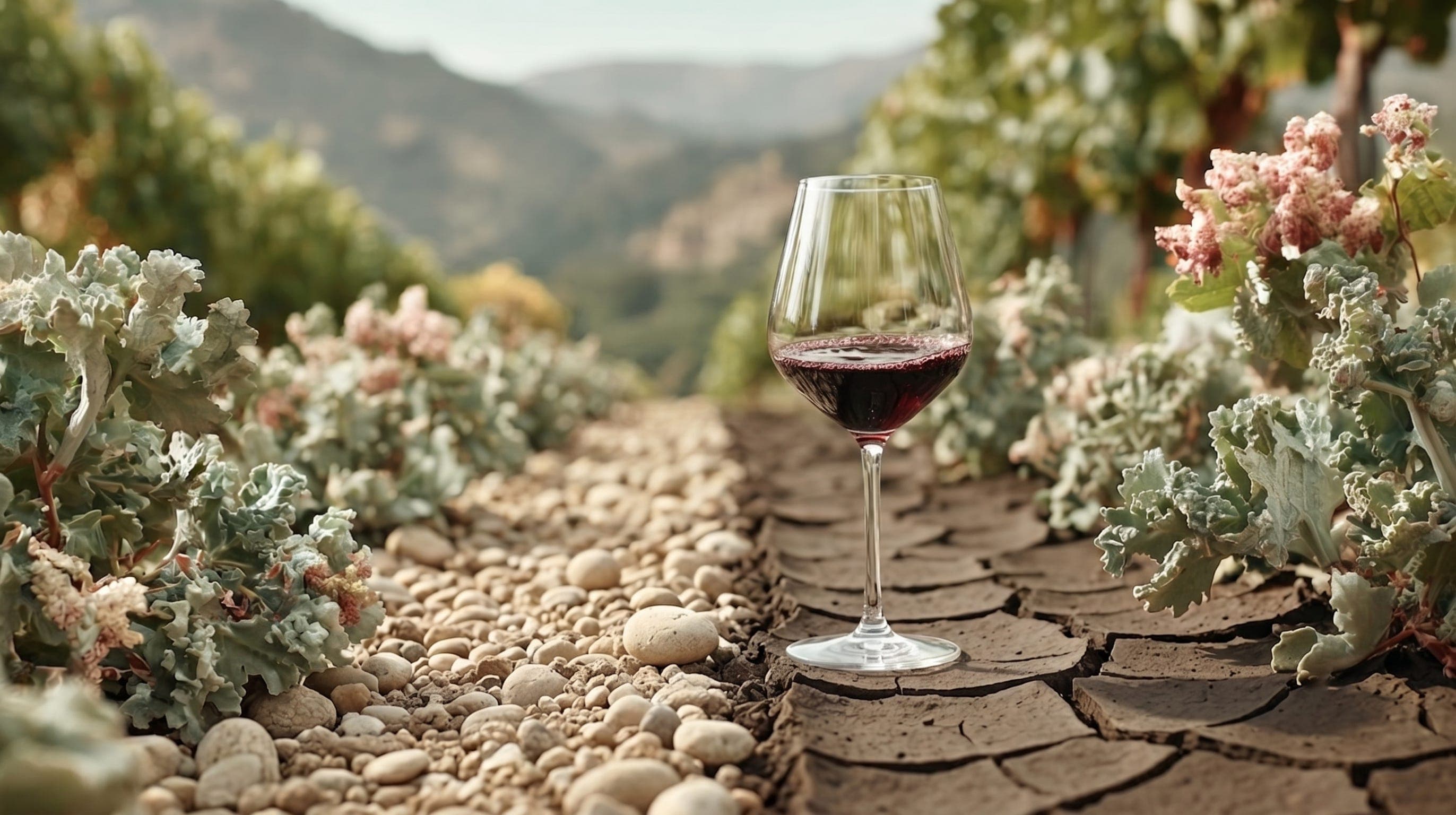
Pour a Cabernet from Oakville and a Cabernet from Stags Leap District side by side, hide the labels, and almost any experienced taster will sort them correctly.
One is broad, dark, and structured, with a dusty grip on the finish. The other is silken and perfumed, all red fruit and violets, with tannins that stay soft even when the wine is serious underneath. They are the same grape, grown a few miles apart on the same valley floor, under the same sun, and you could still sort them blind.
This is the most useful thing Napa never quite explains while you stand at the shelf holding a bottle that says only Napa Valley. The valley is many places at once, a stack of distinct neighborhoods, each printed on the label as an AVA, and two of them tell the clearest story in California Cabernet.
Oakville: the broad-shouldered heart
Oakville sits in the middle of Napa Valley, a band of land about 5,760 acres wide that stretches across the valley floor and spans the Napa River between Yountville and Rutherford. It became an official AVA in 1993, but it had been growing the valley’s most famous Cabernet long before that. This is the home of To Kalon, the most coveted vineyard in California, and of a roster of cult labels.
Oakville’s signature is power held in a frame. The soils run from gravelly alluvial loam on the western bench to heavier, more volcanic ground on the eastern side, and the wines come out broad and deep, with dark fruit, firm structure, and a fine, dusty tannin on the finish that the trade simply calls Oakville dust.
A great Oakville Cabernet feels like it has shoulders. It is built to age, built to fill the mouth, and built, frankly, to impress.
Stags Leap District: the velvet fist
Drive a few miles southeast, tuck up against the rocky palisades of the Vaca Range, and the wine changes character completely. Stags Leap District is tiny, roughly one mile by three, and it earned a place in history twice.
In 1989 it became the first AVA in America granted on the strength of its soil alone, the federal government agreeing that this ground made a distinct wine. And in 1976, a Stag’s Leap Wine Cellars Cabernet from these vines won the red flight at the Judgment of Paris, the result that told the world Napa was serious.
The district’s wines are famous for a single phrase, an iron fist in a velvet glove. The Bale clay loam and the warm afternoon sun bouncing off the eastern hills give Cabernet that is supple and perfumed, leaning toward red fruit and floral notes, with tannins that feel polished and soft even when the wine is powerful underneath. Where Oakville impresses, Stags Leap seduces. (The district has no apostrophe in its name, by the way, the settlement of a long and genuinely bitter fight between two neighboring wineries that both wanted it.)
Why a few miles make the difference
The map below shows the two side by side. Oakville spreads across the open valley floor; Stags Leap District huddles against the hills to the southeast. The grape is identical and the climate is nearly so. What changes is the ground and the lay of the land.
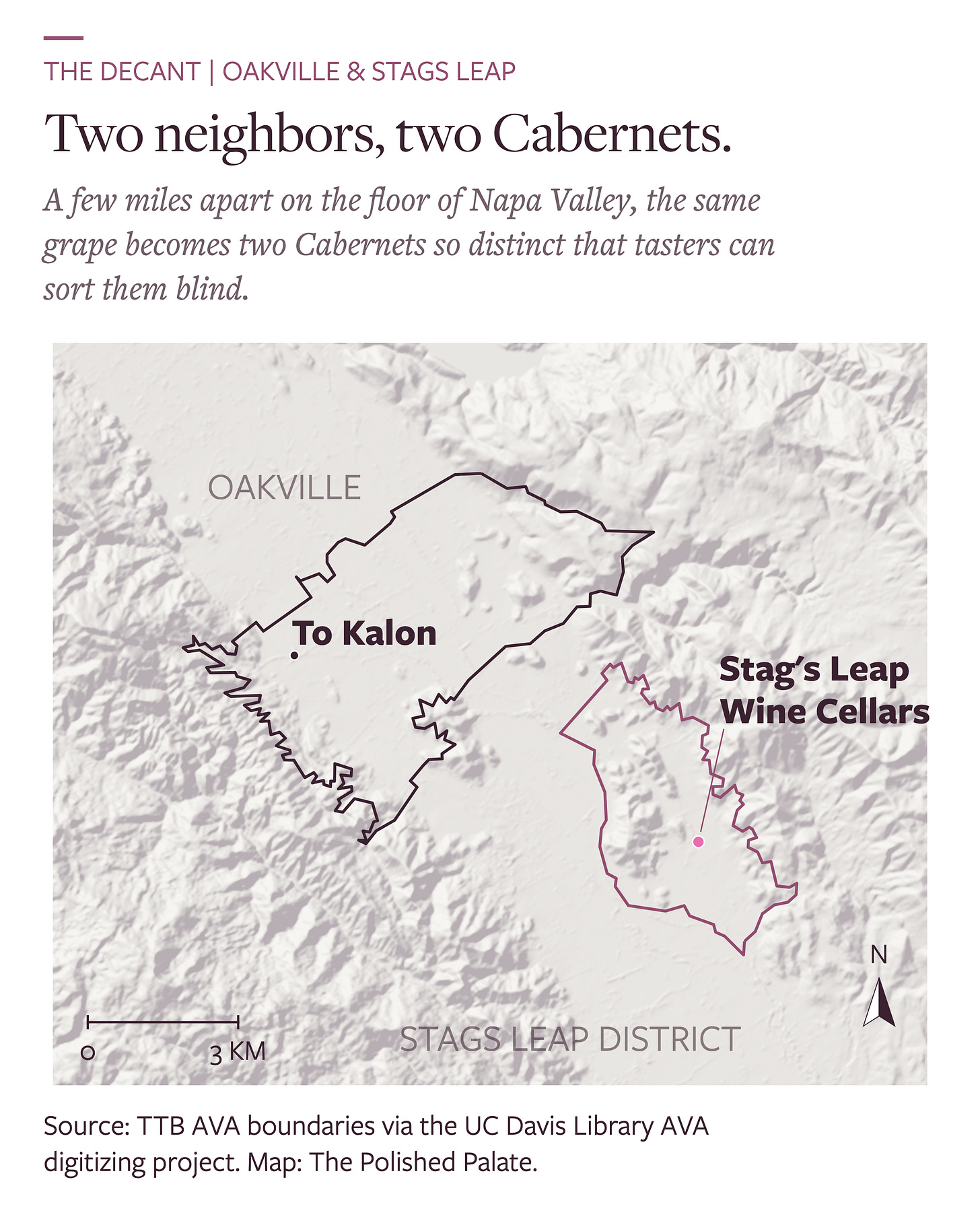
This is terroir doing exactly what the romantic stories claim it does, and for once you can taste it cleanly. Oakville’s deeper, more varied soils and open exposure build structure and dark power. Stags Leap’s particular clay, its compact size, and the heat thrown off the Vaca palisades build perfume and suppleness. Two recipes, written by the dirt, for the same grape.
What to look for on the label
Here is the payoff you can use tonight. On a Napa Cabernet, the AVA is not decoration. A wine can legally say Napa Valley while sourcing fruit from anywhere in the county, but when a label narrows to a specific district, it is telling you something real about how the wine will taste.
See Oakville on the label and expect breadth, dark fruit, firm dusty structure, and a wine that wants a few years or a big steak. See Stags Leap District and expect perfume, red fruit, silken tannins, and a wine that is lovely younger and at the table tonight. Neither is better. They are two different pleasures, and now you can choose between them on purpose, led by what you actually want from the glass.
Pocket Palate: reading the Napa label
- Oakville: Breadth, dark fruit, dusty grip. Wants years or a steak. Home of To Kalon.
- Stags Leap District: Perfume, red fruit, silken tannins. Lovely tonight.
- Napa Valley, alone: Fruit from anywhere in the county. The widest net.
- The rule: The smaller the place on the label, the more it is telling you.
- The point: Small print, real information.
That is the whole quiet skill of drinking Napa well. When the show arrives and turns the valley into one glossy postcard, you will know what the postcard leaves out: that a single word in the small print, the name of a neighborhood a mile wide, is the most honest thing on the bottle.
Go Deeper
If this week’s idea stuck with you, these take it further.
- Oakville AVA (Napa Valley Vintners): the growers’ own profile of the district, its soils, and its famous vineyards.
- Stags Leap District AVA (Napa Valley Vintners): the profile of the small district, its history as the first soil-based AVA, and its signature style.
- Deconstructing Napa Valley: the nested AVAs (World of Fine Wine): a deeper read on how Napa’s overlapping appellations map to real differences in the glass.